
How to Manage AI Projects Effectively
More and more companies are diving into AI projects. From my perspective, many of these companies jumped into AI without a robust understanding of how the project process should unfold – not only from a data management perspective but also from a project management approach.
As a result, their AI project fails. This situation is quite similar to certain organisations adopting the Scrum framework simply because everyone else was doing it, without considering whether it truly suits their requirements.
In this post, I’ll share a project management methodology that I believe can be effective for AI projects.
🤔 Why does Traditional PM Fail for AI Projects?
AI project management is challenging – you can’t apply the traditional IT project management approaches, because, in a very short time, you will miss a core fundamental aspect of AI projects – data-driven, and that’s why the traditional project development life cycle does not work effectively for AI projects.
🚨 The problem?
Companies taking AI projects are unfortunately not prioritising the understanding of client data and often employ traditional project management methodologies and frameworks. While this approach focuses on managing complex application development projects, it is not suitable for data-driven projects. Agile,e for instance, can’t be applied to AI projects solely because AI development is highly unpredictable and usually will not fit into a short sprint. Additionally, due to the nature of AI models, where advanced experimentation is necessary, the training cycle is longer and will not align with the Agile fast iteration cycle.
💡 What can work?
A successful AI project manager knows that data is the heart of AI – without it, machine learning systems cannot learn. However, having data alone is not enough; understanding data, preparing it, evaluating models, and finding the optimal way to implement data into AI systems are equally critical.
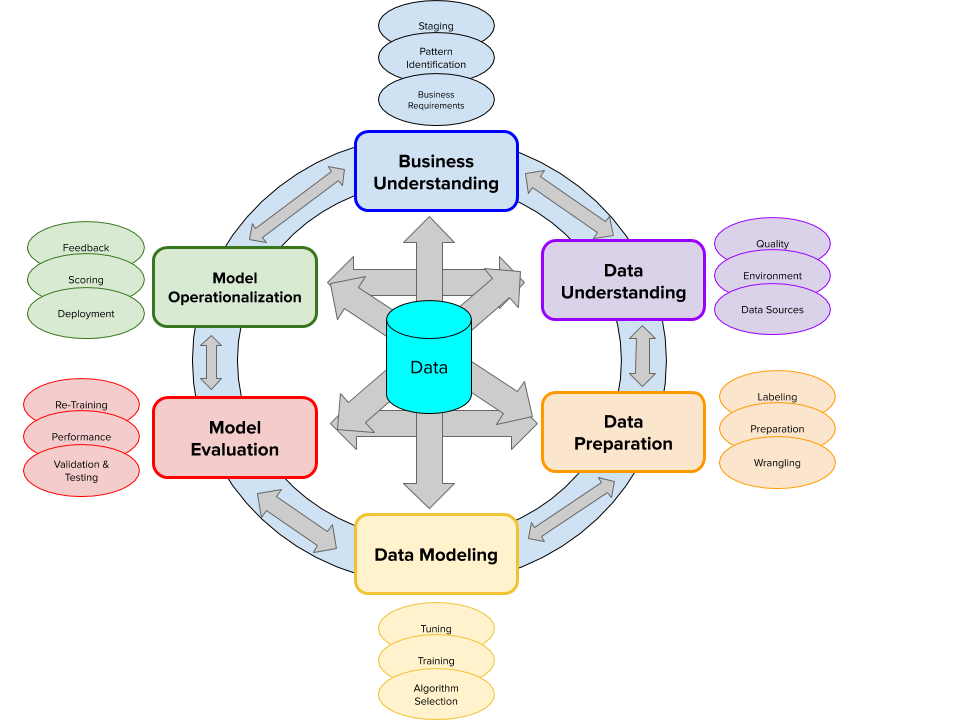
This is where Cognitive Project Management for AI (CPMAI) can help- complementing Agile methodologies, it offers a structured yet flexible approach to AI project lifecycles.
The CPMAI structures six phases to transform business needs into effective AI models:
1️⃣ Phase: Business Understanding – “Mapping the business problem to the AI solution.”
2️⃣ Phase: Data Understanding -“Getting a hold of the right data to address the problem.”
3️⃣ Phase: Data Preparation -“Getting the data ready for use in a data-centric AI Project.”
4️⃣ Phase: Model Development -“Producing an AI solution that addresses the business problem.”
5️⃣ Phase: Model Evaluation – “Determining whether the AI solution meets the real-world and business needs.”
6️⃣ Phase: Model Operationalisation – “Putting the AI solution to use in the real world, and iterating to continue its delivery of value”.
💡Summary:
- Understand how AI is being applied
- Consider the nature of the project
- Understanding the data
Successful AI projects require not only the right methodology but also a balance of structure and flexibility, putting data at the centre of every decision.
Credits: Picture is from CPMAI-Methodology-Source-Cognitive
About author

You might also like

The most-read posts in 2018
Good morning #sqlfamily folks! The very first post in the new year 2019. Tell me: when this time passed??? The year 2018 has just gone. From the blog perspective, it was

Canvas Apps Components
Components are reusable building blocks for canvas apps so that app makers can create custom controls to use inside an app. When developers start from the blank canvas they can


ASF 014 video invitation
– “my brain is all day all night thinking in SQL terms”. Do you know who has said that? Watch the video trailer and guess who is the next guest.




1 Comment
Dew Drop – December 3, 2025 (#4553) – Morning Dew by Alvin Ashcraft
December 03, 12:24[…] How to Manage AI Projects Effectively (Paulina Nowinska) […]